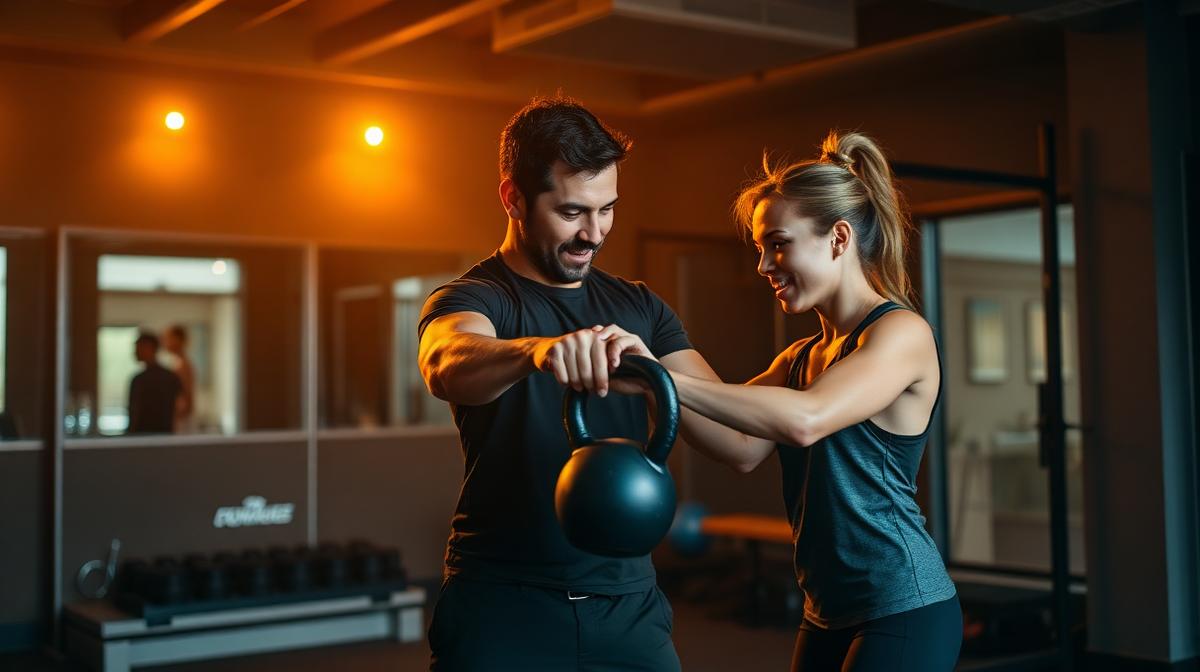
If you're scouting for bone density training Woodstock GA, you've probably noticed the conversation has shifted. The days of "just go for a walk" or "lift some light pink dumbbells" are dead, or at least they should be. For adults in their 50s living around downtown Woodstock or hiking the trails at Olde Rope Mill Park, bone health isn't a "later" problem; it's a right-now priority.
But here's the cold truth: Most of the fitness advice you've been fed is actually working against your skeletal integrity. If you want bones that don't break when life gets messy, you have to stop exercising like a delicate antique and start training like an athlete.
The Real Problem: The "Cardio and Calcium" Trap
Most people over 50 in the Woodstock and Kennesaw area are active. You're walking the Noonday Creek Trail, maybe playing some weekend pickleball, and taking your Vitamin D. You think you're doing enough. You aren't.
Bones are living tissue. They respond to stress, specifically, the kind of mechanical stress that tells your body, "We need to get stronger or we're going to snap." Walking is great for your heart, but for your bones? It's a baseline. It doesn't provide the "osteogenic loading" required to actually increase bone mineral density (BMD).
Worse yet, many people 45–58 have already done the high-intensity bootcamp circuit. You did the 45-minute "burn" classes where you jumped until your knees screamed. You didn't build bone; you just wore down your joints. This leaves you in a "stalled" state: too afraid to lift heavy because you don't want to get hurt, while adults can lose roughly 1-2% of bone mass per year after midlife, and inactivity tends to accelerate it. This is how osteopenia turns into osteoporosis while you're busy doing "low-impact" cardio.
The Better Way: Heavy Lifting as Medicine
The solution isn't more movement; it's more intensity. Research such as the landmark LIFTMOR trial found that supervised high-intensity resistance training (HiRIT) improved bone density in the spine and hips in postmenopausal women — something lighter exercise had not been shown to do as effectively.
We're talking about "heavy" lifting. Not "heavy for a senior," but heavy for you. When you pull a loaded bar off the floor or squat with weight on your back, you are performing axial loading. This compresses the bone, triggering the osteoblasts (bone-building cells) to lay down new minerals. This is the gold standard of bone density training Woodstock GA has to offer.

4 Actionable Pillars for Bone Health Over 50
1. Prioritize Axial Loading (The "Big Three")
If you want to protect your spine and hips, the most common fracture sites, you must load them. This means compound movements like:
- Goblet Squats or Back Squats: These load the hips and lower spine directly.
- Deadlifts: The ultimate bone builder for the posterior chain.
- Overhead Presses: Essential for wrist and shoulder density. At Hive Fitness Journey, we don't do "templates." We modify these movements to fit your current mobility, ensuring the stress goes into the bone, not the joint.
2. Focus on Intensity Over Duration
Bones don't care how long you work out; they care how hard you work out. A 20-minute session where you lift a weight you can only handle for 5–8 reps is infinitely better for your bone density than a 60-minute "tone" class. You don't need to live in the gym. You need to show up, lift something that makes you work, and then go enjoy your life on Lake Allatoona.
3. Progressive Overload is Non-Negotiable
The weight you lift today should not be the weight you lift in six months. If you stay at the same resistance, your bones stop adapting. We track your progress meticulously because "maintaining" is just a slow crawl toward decline. We want you gaining.
4. Stop the Punishment Cardio
Cardio doesn't build bone. In some cases, excessive cardio without strength training can actually lead to lower bone density because it doesn't provide the necessary stimulus to maintain muscle mass (sarcopenia). If you love your walks, keep them, but don't mistake them for a bone-building strategy.

The Woodstock Touch: Why Your Environment Matters
We live in a beautiful part of Georgia, but Woodstock isn't flat. Whether you're hauling groceries up a driveway in Eagle Watch or navigating the uneven terrain at the farmers market, your bones are constantly being tested.
Generic gyms give you machines that take the "work" out of the movement. They sit you down and have you push a lever. That doesn't translate to real-world stability. Our functional strength training for adults over 40 focuses on moving your body through space, under load, just like you do in your daily life. We train you so that a slip on a wet dock at the lake is a "close call" rather than a life-altering fracture.
What the Plan Actually Looks Like
Picture a common scenario we see: a 54-year-old gets a warning from his doctor about declining bone density. He's been a runner for twenty years, and running simply never gave his hips the kind of loading that bone responds to.
The coached approach here isn't complicated. We'd swap a couple of those runs for two days of progressive axial loading — squats, deadlifts, carries, presses — plus one day of mobility work. What we track in the gym is strength: load on the bar going up over months, cleanly and safely. What we don't track is bone density — that's measured by his doctor with a scan, on his doctor's schedule. Our job is to deliver the stimulus research points to and to keep it consistent. He doesn't need "more" exercise; he needs the right exercise.

Stop Guessing with Your Skeletal Health
You don't need a "hype-man" to tell you to try harder. You need a coach who understands the biomechanics of an aging body and the specific requirements of bone density training Woodstock GA residents need to thrive.
Ready to stop the decline? If you want a clear plan and a stronger start this season, check out the 12-Week Fall Strength Program. It is built to help you train with purpose, build strength, and stay consistent with coaching that fits real life.
Prefer to talk it through first? Book your free consultation today. Let's look at your history, your goals, and get you under some iron.
FAQ: Bone Density and Heavy Lifting
Q: Is lifting heavy weights safe if I already have osteopenia?
A: Yes, and it's often the most recommended intervention. The key is supervision. We don't start you with 200 lbs on day one. We start with perfect form and gradually increase the load to ensure your bones adapt safely without injury.
Q: Can I just take calcium and Vitamin D instead?
A: Supplements provide the "bricks," but strength training is the "mason" that puts them in place. Without the mechanical signal from lifting, your body has no reason to use those minerals to build denser bone.
Q: How many times a week do I need to train for bone density?
A: Research suggests that 2 to 3 sessions of high-intensity resistance training per week is the "sweet spot" for stimulating bone growth while allowing for the recovery that adults over 50 require.