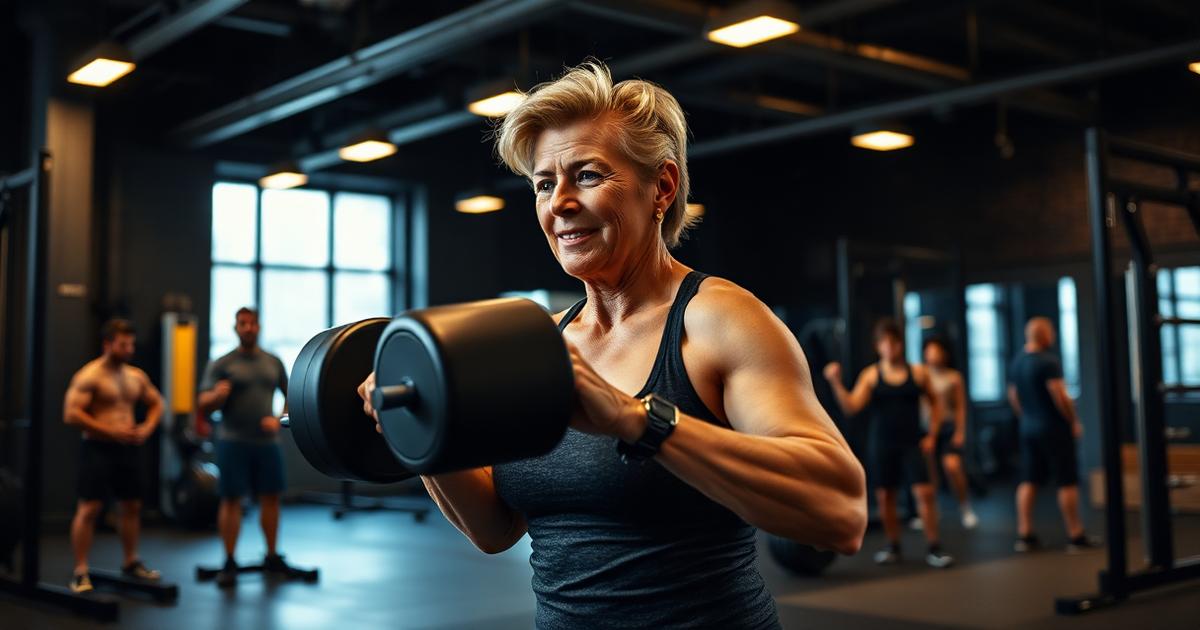
If you have spent decades putting everyone else first — balancing career demands, family responsibilities, and the general whirlwind of midlife — you might have noticed your body starting to whisper (or shout) that things are changing. Maybe you feel a little stiffer getting out of bed, your metabolism does not respond the way it used to, or you are drained by mid-afternoon.
For many women over 50, the default reaction is more cardio, fewer calories, or quietly accepting that slowing down is just part of getting older.
Here is the truth: slowing down with age is not inevitable. Losing your strength, energy, and independence is not a mandatory side effect of another birthday. The missing link for most women in midlife is not treadmill time or a crash diet. It is strength training.
What happens when we ignore strength after 50
For generations, fitness culture sold women a very specific, misguided script: cardio burns fat, weights make you bulky, and aging gracefully means gentle stretching or walking on an incline. Biology tells a completely different story.
Starting around age 30, adults naturally begin losing muscle mass — a process called sarcopenia. After 50 that rate accelerates if left unchecked. Research from the American College of Sports Medicine and the National Institutes of Health shows that without purposeful muscle-strengthening activity, adults lose meaningful muscle tissue every decade, gradually replaced by body fat and declining metabolic health.
When muscle mass declines, several things happen:
- Metabolism slows down. Muscle is metabolically active tissue. Less muscle means fewer calories burned at rest.
- Joints bear the brunt. Without strong muscle supporting your hips, knees, and spine, joints absorb more stress — which shows up as stiffness and aches.
- Bone density drops. Mechanical tension from lifting is one of the primary triggers for bone mineral formation, and one of the best defenses against osteoporosis.
- Everyday tasks feel harder. Carrying groceries, lifting luggage overhead, or getting off the floor takes effort it never used to.
The good news is that your muscles do not have an expiration date. Women over 50 can build muscle, increase bone density, and transform their functional capacity just as effectively as younger adults — given the right plan and proper coaching.
The better way: coached, not crowded
If the idea of walking into a traditional, intimidating gym makes you want to turn right back around, you are not alone. Plenty of women over 50 have tried bootcamps or crowded classes and ended up sore, exhausted, or hurt because nobody checked their form or adjusted the movement to their body.
Longevity is not built by going hard or going home, or by punishing your body for what you ate over the weekend. It is built through sustainable, intelligent strength training that meets you where you are. That is the heart of functional strength training after 40 — strength, mobility, and confidence that support your real life.
When you train with coaches who understand midlife physiology, everything changes. You learn to lift safely, protect your joints, improve your balance, and build strength that holds up outside the gym.
Four ways strength training extends your healthspan
Longevity is not only about living a long life. It is about healthspan — the years you live active, strong, pain-free, and fully independent. Here is what two to three sessions a week actually does.
1. Protecting your bones and fighting osteoporosis
Hormonal shifts during and after menopause can drive rapid bone mineral loss. Resistance training applies safe, progressive mechanical stress to the skeleton, signaling bone-forming cells to build stronger tissue. It is one of the most effective non-pharmacological defenses against fractures and frailty as you age.
2. Safeguarding cardiometabolic health
Regular resistance training improves cardiometabolic markers: lower resting blood pressure, better insulin sensitivity (reducing type 2 diabetes risk), and healthier cholesterol. You are not just changing what you see in the mirror — you are protecting your heart and metabolism.
3. Bulletproofing your joints and mobility
A common myth is that lifting hurts your joints. Done with proper form and progressive overload, strength training surrounds your joints with stable muscle. Paired with targeted mobility work, it clears nagging lower-back stiffness, opens tight hips, and keeps you moving fluidly.
4. Reclaiming confidence and daily energy
There is an unmistakable shift when a woman deadlifts a weight she never thought possible, or carries every grocery bag in on one trip. Strength builds confidence. It replaces the anxiety of physical decline with the quiet assurance that your body is capable.
Bringing strength training to life in Woodstock, GA
If you live in Woodstock, Kennesaw, Acworth, or anywhere in Cherokee County, you do not have to figure this out on your own.
Our community is full of busy professional women, mothers, teachers, and business owners who wanted a fitness home where they felt seen, supported, and coached — not crammed into an anonymous bootcamp.
Our semi-private and small group sessions are designed for busy adults 30-55 who want expert eyes on their form, a supportive room, and a schedule that fits real life. For many women this beats piecing together a generic program alone — see our pillar guide on strength training for women over 40 in Woodstock for the full picture. We assess your starting point, account for past tweaks and tight spots, and build strength that lasts.
What consistent strength training actually achieves
When women over 50 commit to a structured strength and mobility routine two to three times a week, they consistently report:
- Waking up with less morning stiffness and steadier energy.
- Feeling stronger and more stable on uneven ground and local trails.
- Dropping inches and fitting comfortably into favorite clothes without extreme dieting.
- Realizing their strongest years are happening right now, not behind them.
Frequently asked questions
I have never lifted weights before and I am over 50. Is it too late to start?
It is never too late. Muscle tissue responds remarkably well to resistance training at any age. Our coaches start you at your current fitness level, teach you proper movement patterns step by step, and make sure every exercise is safe and effective for your body.
How many days a week do I need to strength train to see results?
For most women over 50, training 2 to 3 times per week is the sweet spot. That is enough stimulus for muscle, bone density, and fat loss while leaving adequate recovery time between sessions. Our sessions run 45 minutes.
Will strength training make me bulky?
No. Women naturally have far lower testosterone than men, which makes it physiologically difficult to build bulk without an extreme, specialized bodybuilding regimen. What strength training actually does is build a lean, capable, athletic body while raising your resting metabolism.
Take the next step
You do not need to guess your way through midlife fitness, and you certainly do not need to punish your body to get results. You need a proven plan, expert coaching, and a room that helps you keep going.
If you want a structured next step, look at our 12-Week Fall Strength Program. And if you would rather just feel the coaching first, your first session is free — no card required.


